


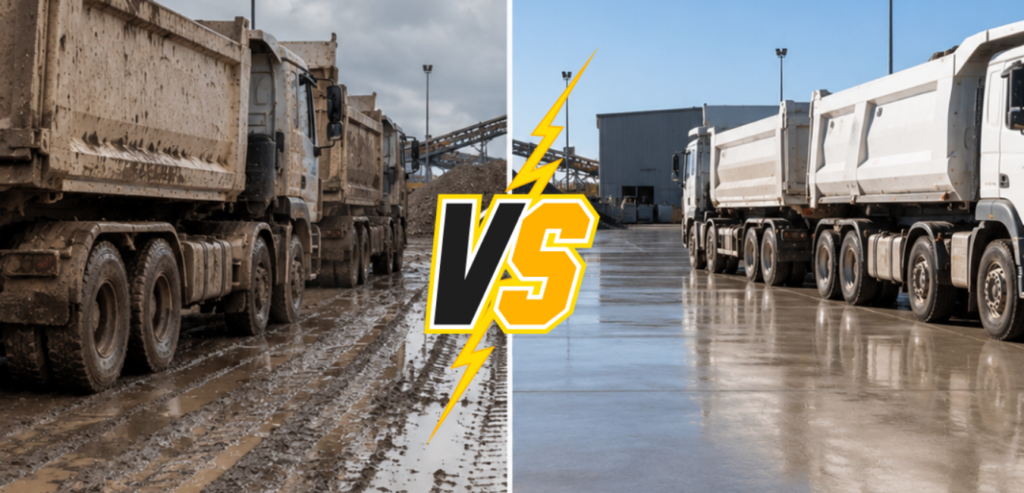
Heavy traffic, dust, and mud: a summer challenge for businesses and construction sites
Summer is often associated with favorable weather, increased production activity, and increased workload on construction sites and industrial sites. However, this season also presents challenges that can negatively impact safety, cleanliness, and operational efficiency. One of the most underestimated concerns the growing volume of traffic entering and exiting plants.
The increased movement of heavy vehicles, commercial vehicles, and machinery inevitably leads to increased dust, soil, and debris transported by their wheels. At first glance, it may seem like a minor issue, but in reality, it can have significant consequences both within production facilities and in the surrounding areas.
For this reason, access control takes on an increasingly strategic role during the summer, transforming from a simple organizational system into a true tool for environmental protection, safety, and process optimization.
The increase in summer traffic and its consequences
During the summer months, many companies experience an increase in logistics activities. Favorable weather conditions allow for faster processing, handling, and transportation. Construction sites are home to numerous operations that are more difficult to complete during the winter, while industrial areas often experience an increase in the flow of vehicles dedicated to the distribution and management of goods.
This increased traffic inevitably leads to an increase in the amount of dirt transported inside and outside facilities. Vehicle wheels accumulate earth, debris, processing residues, and dusty material, which is then dispersed along transit routes.
The constant presence of these contaminants can compromise the cleanliness of company premises and significantly increase routine maintenance costs. Furthermore, dust dispersion on adjacent roads can also pose a problem for traffic flow and the relationship between the company and the surrounding area.
Why dust is a risk to operational efficiency

Dust isn’t just an aesthetic problem. In many industrial settings, it can directly impact plant efficiency and the quality of production.
When it accumulates on machinery and equipment, dust can compromise the proper functioning of mechanical and electronic components, increasing the risk of failures and production slowdowns. In warehouses, it can contaminate materials and products, while in work environments, it can worsen workers’ working conditions.
During the summer, the problem tends to worsen due to high temperatures and low humidity, which favor the dispersion of particles into the air. Under these conditions, limiting the entry of contaminants becomes essential to maintaining the efficiency of the entire production system.
Mud doesn't disappear with the sun
Contrary to what one might think, mud continues to pose a critical issue even during the summer season. Sudden rainfall, increasingly frequent in recent years, can quickly transform yards, storage areas, and construction sites into high-risk areas for contamination.
After a storm, vehicles move large quantities of wet soil, which settles on their wheels and is then transported along access roads. Once dried by the sun, the mud turns to dust, further fueling the problem of environmental contamination.
This alternation of mud and dust requires the adoption of effective access management systems capable of ensuring optimal conditions regardless of weather conditions.
Access control as a prevention tool

When we talk about access control, we often think exclusively of regulating incoming and outgoing flows. In reality, in modern industrial settings, the concept has evolved to also include monitoring the condition of vehicles passing through the facility.
Properly managing access means reducing the amount of contaminants entering facilities and preventing dirt and residues from being dispersed outside. This approach allows for maintaining high standards of cleanliness and limiting the impact of industrial activities on the surrounding environment.
Effective control also allows for monitoring traffic flows, optimizing vehicle movement, and improving the overall organization of operational activities.
Safety, environment and corporate image

Managing access area cleanliness isn’t just about operational aspects. It’s increasingly a factor that directly impacts a company’s reputation.
A clean yard, clear paths, and proper vehicle management convey an image of efficiency, organization, and environmental awareness. Conversely, the presence of dust and dirt can generate a negative perception among customers, suppliers, and regulatory authorities.
The benefits from a safety perspective are also clear. Reducing debris on traffic surfaces helps reduce the risk of accidents and improves overall working conditions.
The most attentive companies are investing in increasingly advanced systems for access management and vehicle cleaning. Modern technologies allow for the automation of numerous operations, ensuring effective results without slowing down internal traffic.
The goal is not just to keep company areas clean, but to create an integrated process capable of improving efficiency, sustainability, and compliance with environmental regulations. In this scenario, access control becomes an integral part of the company’s operational strategy and no longer a mere ancillary activity.
Heavy traffic, dust, and mud are common in many industrial facilities during the summer months. While often considered minor issues, they can significantly impact productivity, safety, and corporate image.
This is why access control plays a crucial role. Properly managing vehicle flows and limiting the spread of contaminants improves operational efficiency, reduces maintenance costs, and ensures safer and more sustainable work environments.
In a context where companies are required to combine production performance and environmental responsibility, investing in advanced access control systems represents a strategic choice capable of generating tangible benefits in the short and long term.
Want to improve your company’s access control?
If heavy vehicle traffic, dust, and mud management are becoming critical issues for your facility or construction site, it’s time to adopt an effective and long-lasting solution. Access control and wheel wash systems help keep work areas clean, reduce contaminant dispersion, and improve compliance with environmental regulations.
Contact the Tecnoter Group team for a personalized consultation and discover how to optimize access management, increase operational efficiency, and protect your company’s image year-round.