


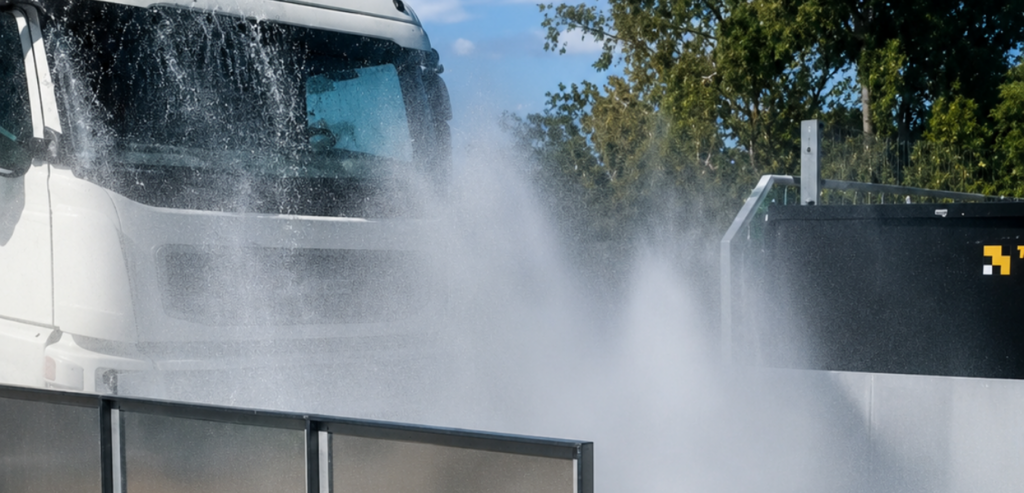
The arrival of rainy periods rapidly changes the operating conditions of construction sites, quarries, mines, and industrial areas. Soils that generate dust during dry weeks can turn muddy, while the constant passage of trucks and construction machinery increases the amount of soil and residues transported to external areas.
It is precisely under these conditions that wheel washers play a key role. Waiting for the problem to manifest often means having to deal with dirty roads, increased cleaning efforts, and less efficient access. Preparing ahead of time allows for addressing the source of the contamination, removing material from vehicle tires before it is transported outside the operating area.
Choosing the right washing system should therefore not be considered merely a matter of cleanliness. A properly designed wheel washer becomes an integral part of the site organization and helps make vehicle management more efficient during the most difficult weather conditions.
Why rain and heavy vehicles increase the mud problem

When it rains, water and soil combine to form material that easily adheres to tires, rims, and the underside of vehicles. The heavier the traffic, the greater the amount of mud moved from one area to another.
This problem arises especially near exits. A heavy vehicle can pick up debris during operations and gradually release it once it reaches a paved surface. The result can be contamination of access roads and external traffic, requiring increased cleanup efforts.
The deposited mud can also continue to pose a problem even after the rain stops. Once dry, the material can crumble and contribute to dust formation, turning a problem typically associated with rainy days into a source of contamination that persists over time.
For this reason, prevention must begin before vehicles leave the site.
The wheel washer as a contamination control point
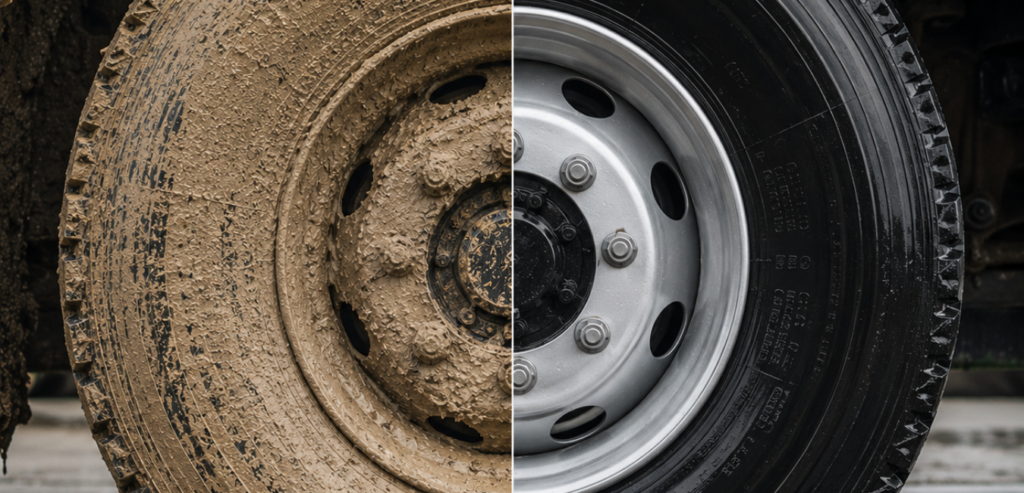
Placing a wheel washer along the vehicle route creates a true control point between the operating area and the outside world. The vehicle is washed before leaving the site, reducing the amount of soil and mud that can be carried onto the road.
The effectiveness of the system, however, depends on its ability to adapt to actual working conditions. Not all sites have the same level of contamination, and not all handle the same number of vehicles. A construction site with only a few daily traffic will have different needs than a quarry or a large industrial site with a constant flow of heavy vehicles.
Choosing the right wheel washer therefore means considering the type of vehicle, the frequency of transit, the amount of material to be removed, and the characteristics of the area. The system must ensure effective washing without obstructing normal traffic.
Wash well without slowing down the flow of vehicles
During rainy periods, the washing system can be subjected to a particularly heavy workload. It is precisely at these times that an inadequately sized system risks becoming a bottleneck.
If each vehicle requires excessive time to complete its wash, waiting times can build up, slowing down the entire operation. At sites with high daily traffic, even a few additional minutes per vehicle can impact overall efficiency.
An effective wheel washer must therefore find the right balance between wash quality and operating speed. The goal is not only to have cleaner tires, but to integrate the process into the normal flow of vehicles.
In this sense, design and sizing become as important as the washing capacity itself. Analyzing the flows in advance allows for a configuration consistent with the site’s actual needs.
Wash water must be managed efficiently
The more sludge that is removed, the greater the amount of contaminants that enter the water used for washing. Without adequate treatment, sediments and residues can accumulate and make system management more complex.
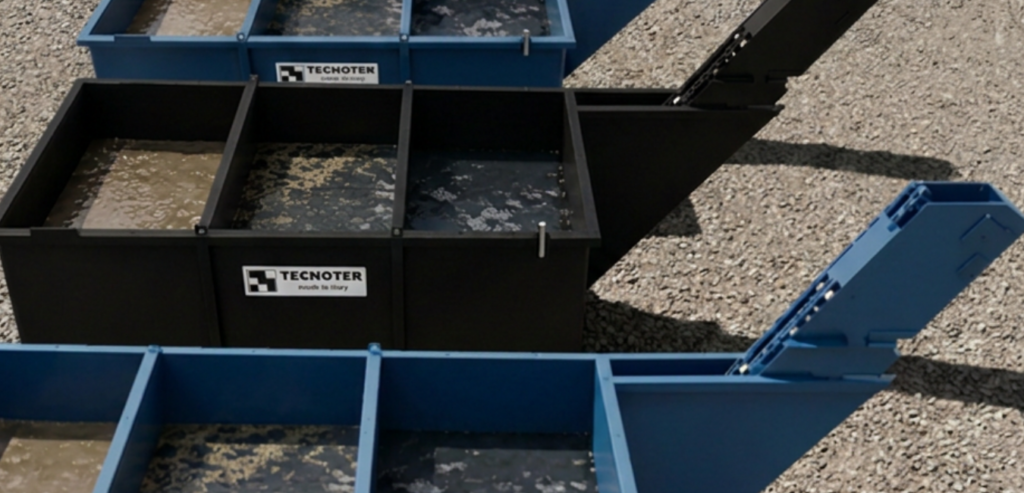
For this reason the wheel washer should be considered together with the water treatment system. Closed cycle filtration solutions allow you to recover the water used in the process, separate the contaminants and reintroduce the resource into the washing cycle.
This approach allows us to limit the continuous use of new water and manage the process in a more rational way.
On sites with heavy traffic, where the wheel washer may carry out numerous cycles each day, water recovery becomes even more important.
Tecnoter Group integrates washing systems and filtration solutions with the aim of creating a more efficient process, in which vehicle cleaning and water management work together.
It's a good idea to prepare before the rains

The worst time to discover that a wheel wash system is inadequate is when the rains have already begun. Planning ahead allows you to verify system performance, identify any critical issues, and prepare the facility for the increased contaminant load.
Even an existing system can be assessed to determine whether it still meets the site’s needs. If traffic has increased or operating conditions have changed, it may be possible to intervene with modular solutions and integrated filtration systems, without necessarily replacing the entire infrastructure.
Preparing therefore means moving from reactive to preventive management, reducing the need to address emergencies precisely during the most challenging periods.
Is your wheel wash ready for the next rainy season?
Don’t wait for mud, debris, and heavy traffic to test your system. Evaluating the site’s characteristics and actual vehicle volume in advance allows us to identify a solution best suited to your operational needs.
Contact Tecnoter Group to evaluate the wheel wash system best suited to your site and integrate water filtration and recovery solutions where necessary. Preparing before the rains means protecting the system’s efficiency when it matters most.