



With the onset of the hottest month of the year, many companies and construction sites enter peak operation. Longer days allow for increased working hours, transportation intensifies, and the number of vehicles on the move increases significantly. This increased activity represents an opportunity to accelerate productivity, but it also puts pressure on the systems that support the daily running of operations.
Among these, vehicle washing systems, water filtration systems, and inflow and outflow management play a key role. When everything is functioning properly, work proceeds without interruptions. However, if one of these elements presents inefficiencies, even a small slowdown can turn into an operational problem that affects the entire organization.
For this reason, the best time to check the condition of systems is not when critical issues first appear, but before peak usage begins.
The arrival of the most intense period requires careful preparation

During the summer months, the number of heavy vehicles passing through construction sites and industrial facilities increases significantly. Trucks, excavators, loaders, concrete mixers, and commercial vehicles make more incoming and outgoing trips, subjecting wash systems to much more intensive work cycles than during the rest of the year.
A system designed to handle a certain traffic volume must be able to maintain its performance even when traffic increases. If this is not the case, slowdowns, vehicle backlogs, and a reduction in washing efficiency can occur, with the risk of soil, dust, and mud being transported outside the operating areas.
Assessing the system’s capacity in advance means ensuring it can sustain the required pace without compromising business continuity.
Filtration is the heart of efficiency
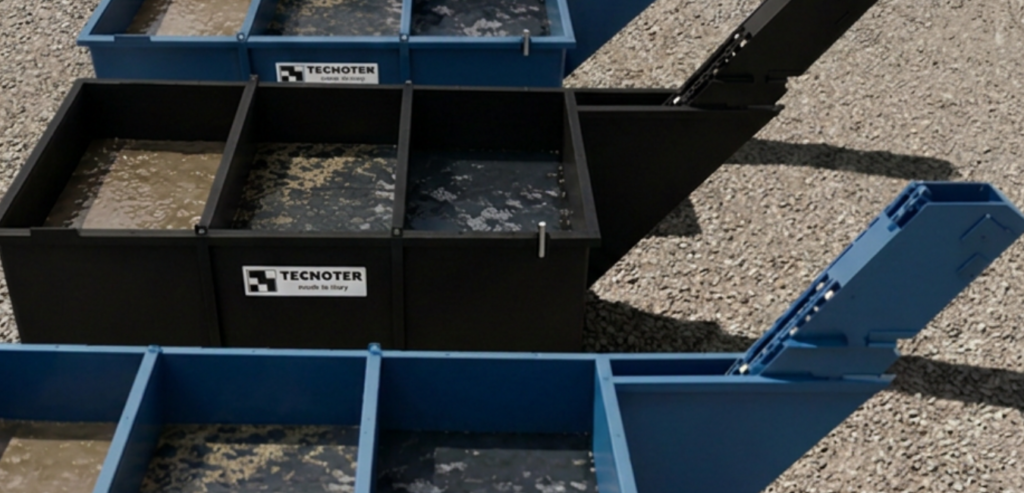
A washing system is truly effective only if supported by an adequate filtration system. The water used during washing continuously collects soil, sand, residues, and other contaminants, which, if not properly managed, can compromise the operation of the entire system.
As the number of washes increases, so does the quantity of material to be treated. An inefficient filtration system can reduce the quality of the wash, increase maintenance requirements, and result in higher-than-necessary water consumption.
Closed-loop solutions, on the other hand, allow water to be recovered, treated, and reused, maintaining consistent process quality and reducing waste. Before the onset of the hottest months, it is therefore essential to verify that the filtration system is operating under optimal conditions and is sized to handle the increased workload.
Preventive maintenance and modular technologies

One of the most common mistakes is to postpone maintenance until a fault occurs. During peak activity, this can become particularly costly.
Intervening early means scheduling replacements without compromising productivity and reducing the risk of downtime just when the construction site or plant is operating at peak levels.
Preventative maintenance therefore represents an investment in operational continuity rather than simply a management cost.
Operational needs can change rapidly. An increase in the number of vehicles, new orders, or the expansion of a construction site may require higher performance than initially anticipated.
For this reason, it is increasingly important to choose modular solutions that can grow with your business. The systems developed by Tecnoter Group are designed to easily integrate with existing systems, allowing you to expand your washing and filtration capacity without having to completely replace existing infrastructure.
This flexibility allows companies to face seasonal peaks with greater peace of mind, while maintaining high standards of efficiency and sustainability.
Preparing today means working better tomorrow.
The start of the hottest month is the ideal time to ensure every component of your system is ready for intensive use. Checking the operation of your car wash system, assessing filtration efficiency, and analyzing vehicle flow allows you to identify any critical issues before they impact productivity.
Preventive management reduces the risk of breakdowns, improves washing quality, limits contaminant dispersion, and optimizes water resource usage. This approach not only benefits during the summer, but also helps improve the overall efficiency of your system year-round.
Want to check if your system is ready for peak activity?
Before increased flow puts pressure on your car wash and filtration system, rely on a targeted technical assessment. Tecnoter Group designs modular solutions for car washes and closed-loop filtration, designed to ensure operational continuity, reduce consumption, and maintain high efficiency standards even during peak periods.
Contact Tecnoter Group for a personalized consultation and discover how to optimize your system before workload peaks.