


With the onset of the rainy season, construction sites, quarries, and industrial areas face a critical issue that can rapidly impact daily operations: mud tracked out by vehicles.
Just a few days of rain are enough to completely alter ground conditions. Surfaces turn to mud, and trucks, excavators, and heavy machinery pick up large amounts of soil on their wheels and undercarriages. As these vehicles reach paved areas or leave the site, the accumulated material is progressively shed along the route.
The result can be constant contamination of access points and external roadways, leading to increased cleanup requirements and site management challenges.
Preparing before the rains begin means addressing the root cause of the problem. And this is precisely where wheel-washing systems come into play.
The right wheel washer must be suited to the site
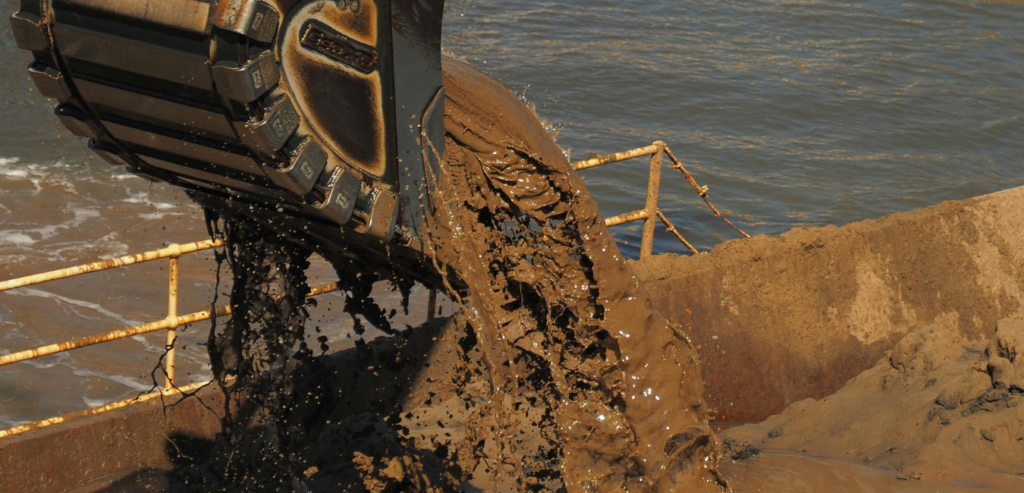
When soil and mud are tracked out of an operational area, the most obvious result is the dirt left on the roadway. However, the consequences go beyond that.
The need for repeated cleaning requires time, equipment, and personnel. Furthermore, once the deposited material dries, it can turn into dust and be kicked up again by passing vehicles.
This creates a cycle where contamination persists even after the rain has stopped.
For this reason, addressing only the symptoms can be inefficient. Cleaning a road that is already contaminated means intervening after the soil and mud have already left the site. A wheel-washing system, on the other hand, allows for proactive action, removing material from the tires before the vehicle reaches public roads. Yet, not all wheel-washing systems meet the same needs.
The right wheel-washing system must be suited to actual traffic conditions.
Proper sizing depends on the site’s operational conditions and, above all, on the number and type of vehicles requiring treatment.
A small construction site with low daily traffic volume has very different requirements compared to a quarry or a large industrial plant where dozens of trucks pass through the access point every hour.
As traffic increases, the system must ensure effective washing while maintaining a steady flow. If the process takes too long, the washing area can become a bottleneck, causing queues and delays.
Choosing the right wheel-washing system therefore means striking a balance between cleaning capacity and operational continuity. The system must fit into the vehicles’ normal route without compromising site productivity.
But that is not all.
The right wheel-washing system must also adapt to the site’s specific conditions.
For instance, the heavier the rainfall, the greater the load placed on the washing system. During periods of frequent rainfall, it is not just the amount of mud on the wheels that increases; the load of contaminants the washing system must handle also rises.
The water used collects soil, sand, and other solids from the vehicles. If these materials are not properly separated, they can accumulate in the tanks and the circulation system, increasing maintenance requirements and reducing the plant’s overall efficiency.
For this reason, a wheel washing system should not be viewed in isolation. The quality of the wash also depends on what happens to the water after the dirt has been removed.
A properly designed system must therefore integrate washing, contaminant separation, and water management.
Washing and filtration must work together
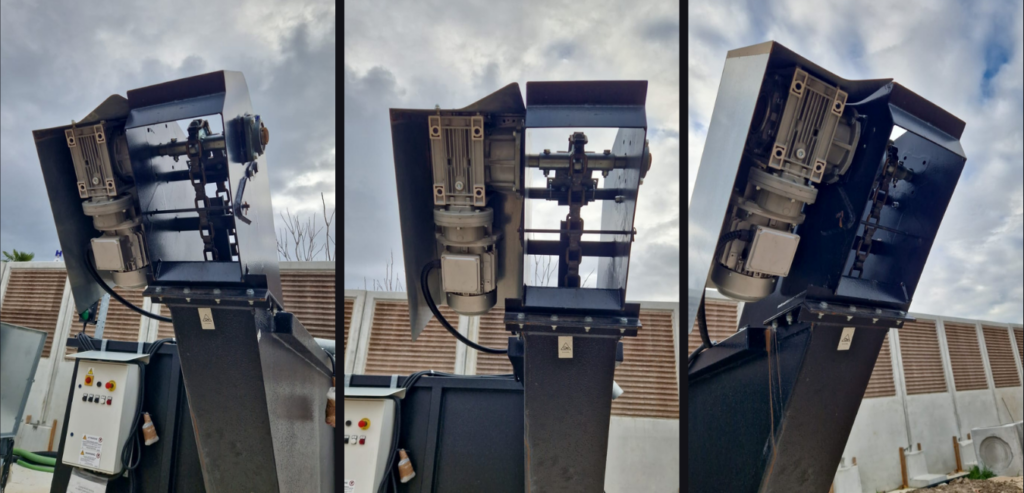
At sites with high traffic volume, the continuous use of fresh water can significantly increase consumption. At the same time, the resulting contaminated water creates a volume that must be managed.
Closed-loop filtration solutions offer a different approach to this issue. The water used for washing is recovered, treated to remove contaminants, and reintroduced into the process.
In this way, wheel washing and filtration become part of a single, integrated cycle.
This principle is particularly important during rainy periods, when the system may have to handle a high number of vehicles and increased amounts of mud simultaneously.
Tecnoter Group solutions are developed with the entire process in mind, featuring washing and filtration systems designed to suit specific operating conditions and site characteristics.
Preparation prevents emergency interventions: waiting until the first week of heavy rain to check the wheel washer’s efficiency means intervening only after a problem has already arisen.
The period leading up to the rainy season is the ideal time to assess the system’s status. Washing capacity, the condition of the hydraulic circuit, filtration efficiency, and sludge management must all align with projected traffic volumes.
Even if a wheel washer is already in place, replacing the entire system is not necessarily required. If operational needs have changed, performance can often be improved through retrofitting or by integrating new filtration and water treatment solutions.
The goal is to enter the most demanding period with a fully prepared system, rather than trying to fix inefficiencies while the site is operating at full capacity.
Choose Tecnoter Group wheel washers

Choosing the right wheel wash system means looking beyond the washing process itself. Vehicle flow, mud volume, water recovery, filtration, and maintenance must all be evaluated as integral parts of the same process.
A solution tailored to actual site conditions ensures greater efficiency and operational continuity during rainy periods.
Is your facility ready for the upcoming rains?
Don’t wait for mud and heavy traffic to expose your system’s limitations. Analyzing vehicle flow and site conditions now allows you to identify the ideal solution before the most challenging season begins.
Contact Tecnoter Group to evaluate the best wheel wash system for your site’s needs and discover how to integrate washing, filtration, and water recovery into a system designed to operate efficiently even under the toughest conditions.