



During rainy periods, mud is an unavoidable presence on many construction sites. The real problem arises, however, when soil and debris do not remain confined to the work area but are instead carried outside by the wheels of heavy vehicles.
Trucks, concrete mixers, and construction machinery travel across muddy surfaces, accumulating material on their tires and gradually depositing it along access routes and on public roads. At this point, what might seem like a simple cleaning issue becomes an operational concern.
Managing mud can, in fact, lead to costs that are not always immediately linked to the cleaning process—such as labor hours spent on cleanup, the use of equipment to restore surfaces, delays at access points, and unplanned interventions.
To understand the true cost of mud, one must therefore look beyond what simply remains on the wheels.
The most obvious cost is often just part of the problem
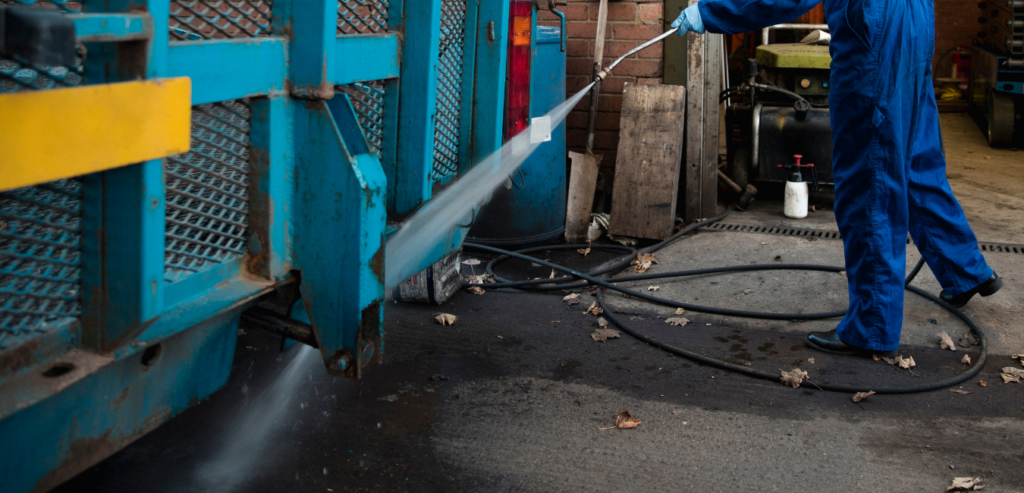
When external access routes become soiled due to the constant movement of vehicles, the immediate consequence is the need for cleaning. The heavier the contamination, the more frequent these cleaning interventions may need to be.
However, the cost is not limited to the cleaning process itself. Any additional task requires personnel, equipment, and time—resources that could otherwise be deployed elsewhere. If the problem recurs with every vehicle movement, the company falls into a reactive cycle: a vehicle tracks out mud, the surface is cleaned, and the process begins all over again.
This is where one of the primary indirect costs of contamination becomes apparent. Constantly addressing the symptoms is often less efficient than controlling the problem at its source. Reducing the amount of material tracked out of a site inherently decreases the need for subsequent cleanup efforts.
Dirty access points can lead to operational inefficiency.
The entry and exit points of a construction site serve as critical operational hubs. Every vehicle must pass through them, and any slowdown can have a ripple effect on subsequent activities.
During rainy periods, the combination of heavy traffic and the accumulation of mud can complicate the management of these areas. If frequent cleaning interventions—or inefficient procedures for removing dirt from vehicles—are added to standard operations, the access point risks becoming a bottleneck.
Consequently, any vehicle-washing system must be evaluated in relation to actual traffic flow. A wheel-washing unit that is effective but inadequately sized can cause delays; conversely, a solution designed with the specific number and type of vehicles in mind allows the washing process to be integrated seamlessly into the standard operational workflow.
The goal is not merely to wash the wheels, but to do so without disrupting the continuity of site operations.
The true cost emerges when time is lost
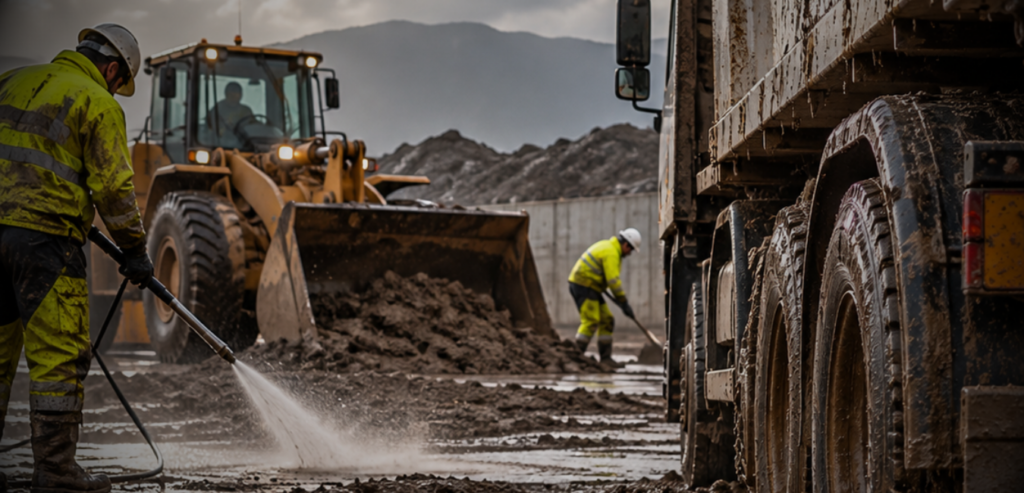
Operational time is one of the least visible yet most significant factors. A few minutes of waiting might seem negligible when considering a single vehicle; however, when multiplied across dozens of daily trips, it can have a tangible impact on work organization.
The same principle applies to unscheduled interventions. Unplanned cleaning, maintenance necessitated by sediment buildup, or a washing system that requires frequent manual intervention all divert time away from core operations.
Therefore, when evaluating the costs of managing mud, it is essential to consider the entire process. The water used is only one component; transit times, residue management, maintenance, and the continuity of the workflow all contribute to the system’s economic efficiency.
Stopping contamination before it leaves the site.
A preventive approach shifts the point of intervention. Instead of focusing resources on cleaning surfaces that are already contaminated, action is taken on the vehicles before they leave the work area.
Wheel-washing systems allow for the removal of a significant amount of soil, mud, and debris from tires at the exit point. In this way, the site access point becomes a true contamination control zone.
To be effective, however, the washing process must be integrated into a broader system. During periods of heavy rain, the volume of material removed from vehicles can increase rapidly. Everything removed from the tires ends up in the wash water and must be managed.
This is where washing and filtration become two parts of the same process.
Managing even what the wheel washer removes
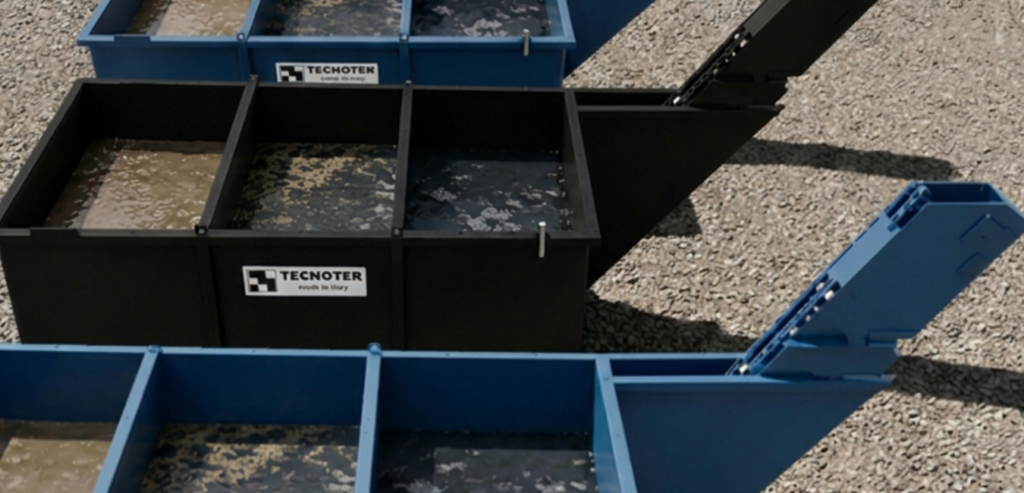
Wash water can contain varying amounts of soil, sand, and solid particles. If these contaminants are not properly separated, they can accumulate in the tanks, increasing the facility’s maintenance requirements.
A solution based on water recovery and filtration, by contrast, allows for a more integrated approach to the entire cycle. The goal is to treat the water so it can be reused within the process, limiting the constant need for fresh water and managing the removed contaminants more rationally.
Tecnoter Group’s solutions are built on this logic: viewing the wheel-washing unit, hydraulic circuit, filtration system, and vehicle flow as interconnected elements. Even in existing facilities, a technical analysis can identify opportunities for retrofitting and improvement, without necessarily requiring the replacement of the entire infrastructure.
From cleaning to operational continuity.
The true objective of sludge management is not merely to ensure a cleaner output; it is to prevent contamination from interfering with the normal operation of a work site.
When a system is sized according to the actual conditions of the site, the washing process becomes an integral part of the operational workflow rather than an additional task. This reduces the need to constantly address external issues, allowing more resources to be dedicated to core production activities.
It is this shift—from managing the consequences to focusing on prevention—that transforms sludge control into a strategy for greater efficiency.
Don’t just look at the cost of cleaning. Waiting times, ad-hoc interventions, water management, and maintenance can impact overall efficiency far more than it might appear.
Contact Tecnoter Group to analyze vehicle flow and potential bottlenecks at your site, and to evaluate an integrated washing and filtration solution tailored to your project’s actual operating conditions. Managing mud before it leaves the site also helps ensure the continuity of your operations.